

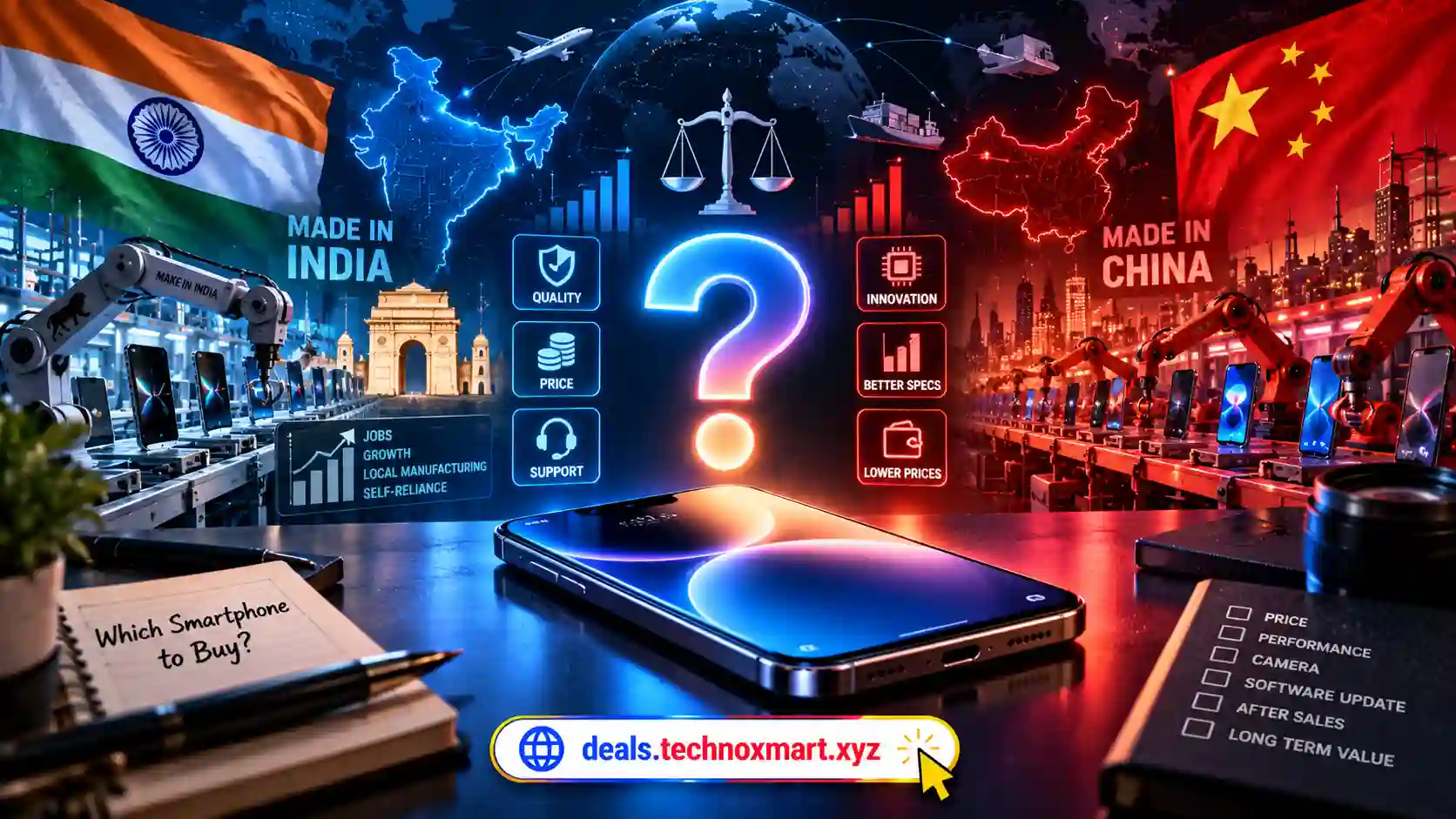
Over the past few years, a strange trend has taken over the Indian consumer electronics market. Popular homegrown lifestyle brands that once made their fortunes selling TWS earbuds, smartwatches, Bluetooth speakers, and fitness bands are suddenly making a sharp pivot. Names like Fire-Boltt, Mivi, Philips, Carbon, and whispers of brands like Noise and BoAt entering the smartphone arena have left consumers scratching their heads.
Why are all these lifestyle accessory companies suddenly obsessed with manufacturing budget smartphones in India? Is this massive wave of new entrants a golden era of consumer choice, or are everyday buyers being quietly misled by clever marketing? Let’s put on our investigative hats and unpack what is really happening behind the scenes.
1. The Government Push: Why Everyone is Entering the Smartphone Market
To understand this sudden gold rush, we have to look directly at policy changes introduced by the Indian government. The central government rolled out a massive Production-Linked Incentive (PLI) scheme worth a staggering ₹62,500 crore aimed at scaling up domestic mobile manufacturing.
The primary goals of this initiative are clear:
- Attract global electronics manufacturing giants to establish domestic facilities.
- Offer lucrative opportunities for Indian homegrown brands to build local supply chains.
- Reduce heavy import dependencies and transform India into a global electronics manufacturing hub.
Capitalizing on these financial incentives, local accessory brands recognized a massive business opportunity to transition from mere importers and rebranders to local device assemblers and vendors.
Before making your final choice in this shifting market, make sure to read The Ultimate Indian Smartphone Buyer’s Guide (September–October 2026: Upcoming Releases, Key Specs & Category Champions] to explore category champions and upcoming releases.
2. Targeting the Dead Under-₹15,000 Segment
From a business perspective, these brands are playing a calculated game. The sub-₹15,000 smartphone category in India has faced severe stagnation. Data indicates a sharp year-on-year decline in affordable handset availability as smartphone manufacturers prioritize higher-margin premium and mid-range devices.
Sensing a massive vacuum in the budget market, local brands are stepping in. Fire-Boltt made headlines by launching a feature-packed 5G smartphone under ₹15,000, offering specifications that usually belong in higher pricing brackets. Similarly, brands like Mivi—led by prominent industry figures—have announced aggressive budget smartphone launches, while legacy names like Carbon are spotted prepping Geekbench listings for unexpected comebacks.
If you are looking beyond budget devices and want to check out high-end foldables, read our coverage on the Samsung Galaxy Z Fold8, Fold8 Ultra & Flip8 Launched in India: Price, Specs & Should You Buy?
3. The Chinese ODM Reality Check: Are These Really “Indian” Phones?
One of the most critical questions consumers must ask is: How much of these phones is genuinely Indian?
The truth is that the vast majority of these brands rely heavily on Chinese Original Design Manufacturers (ODMs). An ODM in China designs, manufactures, and builds hardware catalogs from scratch. Local Indian brands simply pick items from these existing catalogs, slap their own branding on the back, and market them locally.
Because India still has limited domestic component ecosystems, completely cutting out reliance on Chinese supply chains is virtually impossible for first-generation attempts. This means consumers are often buying rebranded white-label hardware with local software tuning.
If you want reliable performance from established players instead of unproven first-generation devices, explore our recommendations in the Best Smartphones Under ₹50,000 in 2026 – Which Premium Phone Should You Buy? guide.
4. The Big Consumer Dilemma: Is This Trend Good for Buyers?
At first glance, increased competition is always a win for consumers. It breaks up duopolies, drives aggressive pricing, and forces dominant players to innovate. However, jumping headfirst into unproven first-generation devices comes with hidden risks:
- The Accountability Void: What happens if a new brand enters the market, sells thousands of budget units, and quietly exits the industry two years later? There is zero accountability for software updates, security patches, warranty claims, and spare parts.
- The Ghost Town of After-Sales Service: A smartphone is a primary device that average users keep for two to four years. Without a robust network of service centers, getting a cracked screen or a dead battery replaced becomes an impossible nightmare.
- Marketing Traps: Just like past controversies involving misleading data privacy claims by new tech startups or the aggressive marketing tactics that ultimately dragged down once-mighty giants like Micromax, history shows that playing with consumer trust is easy, but maintaining it is grueling.
If you still prefer these homegrown brands for their traditional accessories rather than their new phones, check out our expert picks in the Best Smartwatch Under ₹5000 in India 2026 – Top 8 Picks for Every Budget guide
5. Smart Consumer Advice: What Should You Do?
If you are tempted by the aggressive pricing and flashy specifications of these new homegrown smartphone launches, do not rush to buy immediately. Here is how you can protect your hard-earned money:
- Wait and Watch: Avoid buying first-generation devices on day one. Let early adopters test the waters and review the long-term durability of the hardware.
- Track Software Support: Check the brand’s history with updates. Are they rolling out timely security patches, or are they abandoning devices right after launch?
- Verify Service Infrastructure: Ensure that physical service centers or reliable pickup-and-drop warranty services exist in your city.
- Look at Proven Survivors: Among domestic brands, companies like Lava have proven their commitment to long-term hardware improvement and software transparency. Look for brands that demonstrate sustainable multi-year staying power rather than short-term hype.
Ultimately, while market competition is a welcome sight, let the brands prove their long-term commitment before you hand over your money.
Frequently Asked Questions
1. Why are Indian lifestyle brands entering the smartphone market?
Smartphone launches can help lifestyle electronics brands expand beyond earbuds, speakers and wearables into a larger consumer-electronics category. Budget smartphones also give brands an opportunity to compete on price, distribution and local-market familiarity. Their success will depend on product quality, software support, service coverage and long-term investment.
2. What is driving India’s smartphone manufacturing push?
India’s manufacturing policy aims to expand domestic production, increase local value addition, strengthen supply chains and encourage Indian brands to develop their own design and research capabilities. The government notified a ₹62,500 crore Mobile Phone Manufacturing Scheme in August 2026 for a five-year period from FY 2026–27 to FY 2030–31. This is distinct from the earlier Production Linked Incentive scheme for large-scale electronics manufacturing.
3. Are smartphones sold by Indian brands completely made in India?
Not necessarily. A brand’s Indian ownership, the location where a phone is assembled, the origin of its components and the design ownership are different things. Buyers should check the manufacturer’s disclosures and the device’s country-of-origin information rather than assuming that an Indian brand means every component is domestically produced.
4. What is an ODM in smartphone manufacturing?
An Original Design Manufacturer, or ODM, designs and manufactures products that another company can sell under its own brand. Working with an ODM can help a brand launch a phone without developing every hardware component from scratch. However, the exact design, engineering, software and manufacturing responsibilities vary between partnerships.
5. Is it safe to buy a smartphone from a new Indian brand?
A new brand is not automatically unreliable, but buyers should investigate its warranty terms, service-centre network, software-update commitment, spare-parts availability and customer-support record. Independent reviews and real-world feedback after launch can reveal issues that a specification sheet may not show.
6. Should you buy a first-generation budget smartphone immediately after launch?
If your current phone still works, waiting for independent reviews can be sensible. Early testing may reveal battery, camera, software, network or durability problems that are difficult to judge from promotional material alone. If you need a phone urgently, compare the new device with established alternatives at the same price.
7. What should buyers check before purchasing a budget smartphone?
Check the processor, display, battery and charging performance, camera quality, 5G band compatibility, software-update policy, warranty coverage and nearby repair options. Compare the final price with competing models and read independent reviews before making a decision.
8. Does manufacturing a phone in India mean it uses only Indian components?
No. Local assembly and domestic component sourcing are different measures. A phone assembled in India can still use components manufactured elsewhere. To assess domestic value addition, look for credible manufacturer disclosures rather than relying only on a “Made in India” label.
For Regular & Fastest Tech News and Deals&Offers, Follow TECHNOXMART on Twitter, Facebook, Instagram, Google News and Subscribe Here Now. Join our WhatsApp Channels For News & Real Time Deal Alerts.